Creating a Biodiversity Net Gain Pond & Wetland Habitat in West Sussex
Creating a Biodiversity Net Gain Pond & Wetland Habitat in West Sussex
Biodiversity Net Gain is becoming an increasingly important part of development and land management, creating opportunities to establish and enhance habitats that provide measurable benefits for wildlife.
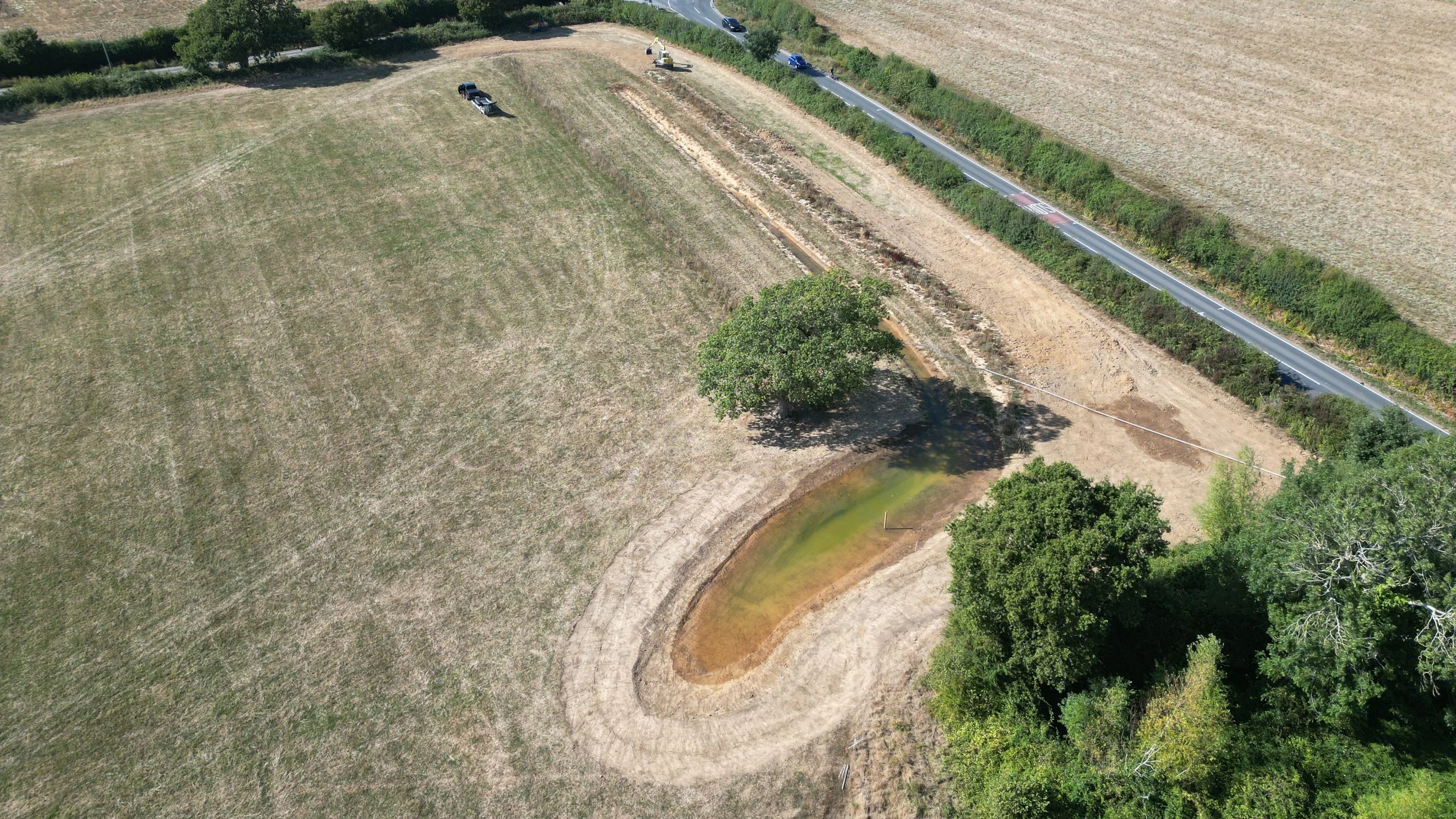
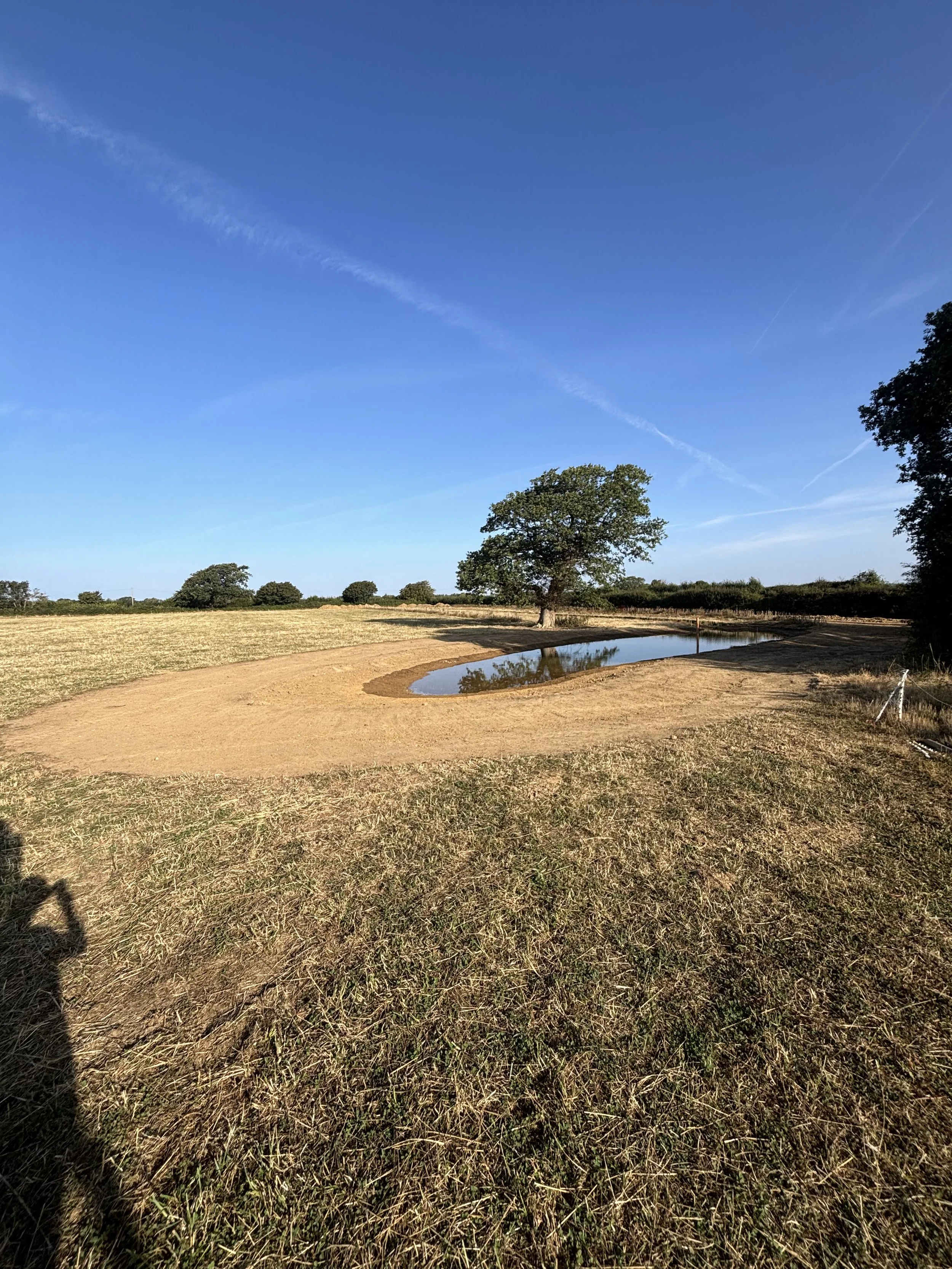
We recently completed the earthworks for a Biodiversity Net Gain pond and wetland habitat in West Sussex, working to a scheme designed by the project ecologist.
The aim was not simply to excavate a pond, but to create a varied wetland environment incorporating different water depths, shallow margins and reed-bed areas that can develop into valuable habitat over time.
From Ecological Design to Construction
Successful habitat creation starts with understanding the ecological design and translating it accurately into the ground.
Working from the ecologist’s specification, we set out and formed the pond to create the required profiles, levels and habitat areas.
Unlike a conventional ornamental pond, a wildlife or BNG pond benefits from a variety of conditions. Changes in depth, gently profiled margins and shallow wet areas provide different environments in which aquatic and marginal vegetation can establish.
Our role was to deliver the practical earthworks while maintaining the intent of the ecological design.
Creating the Pond Profiles
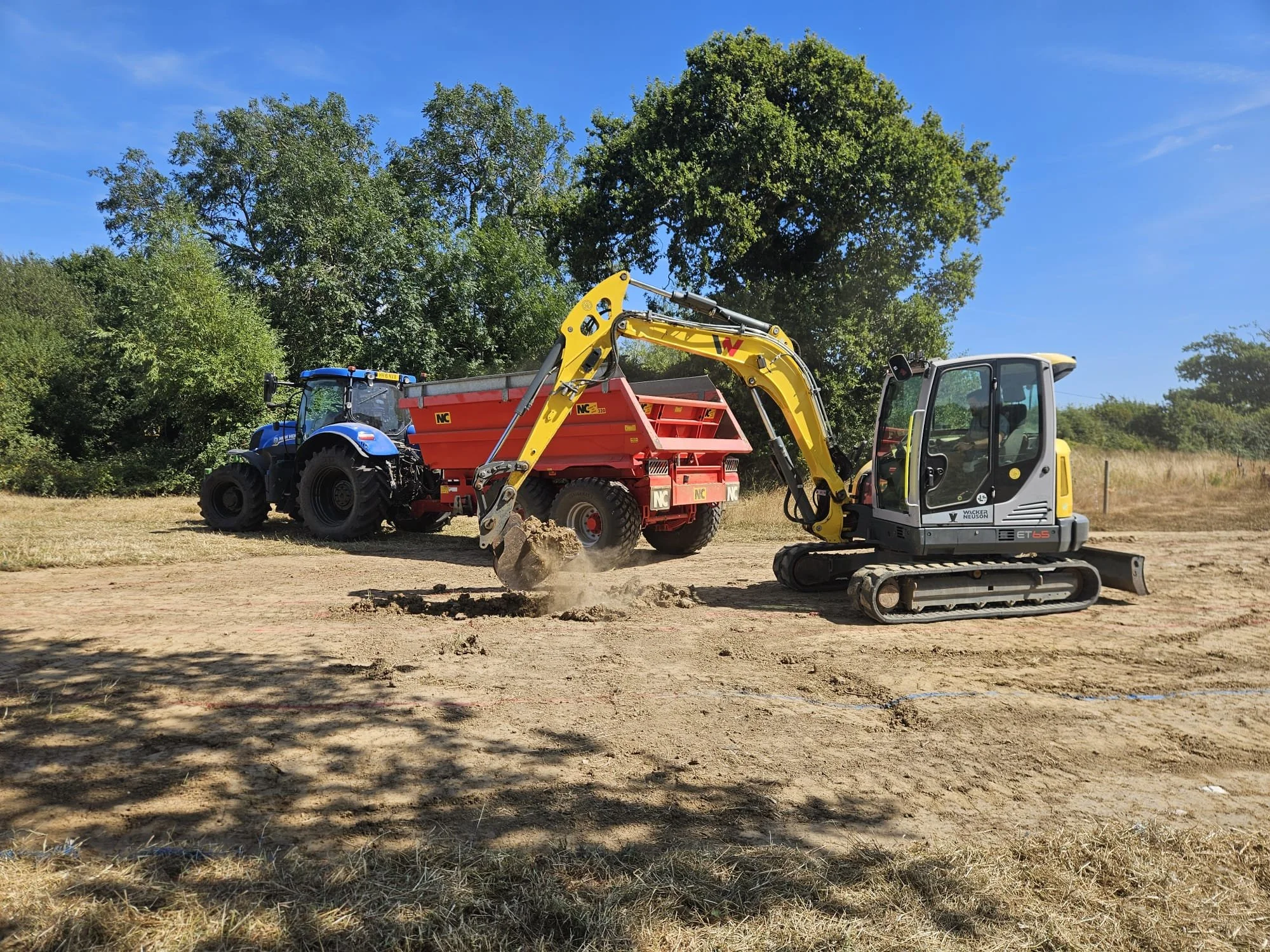
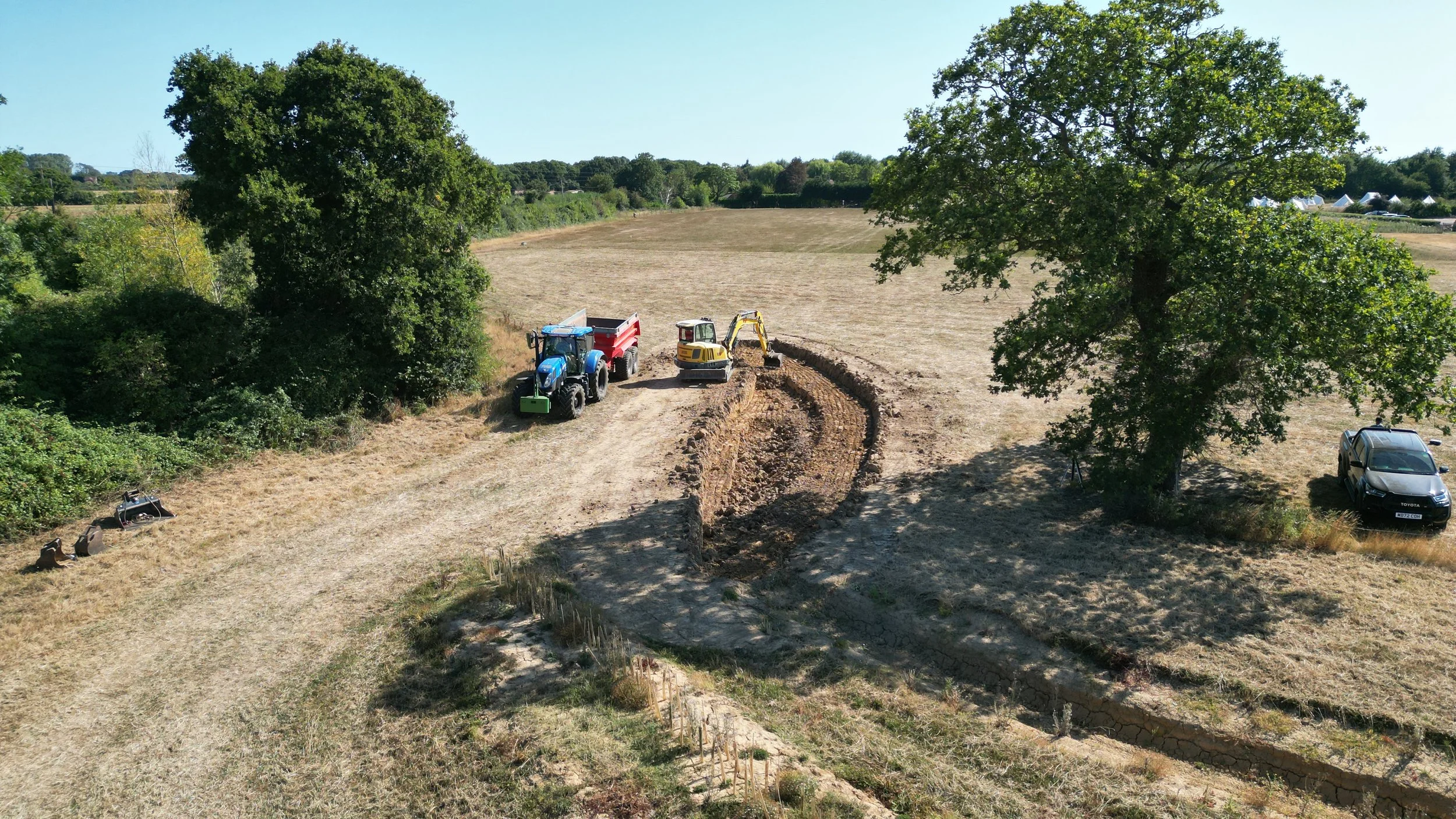
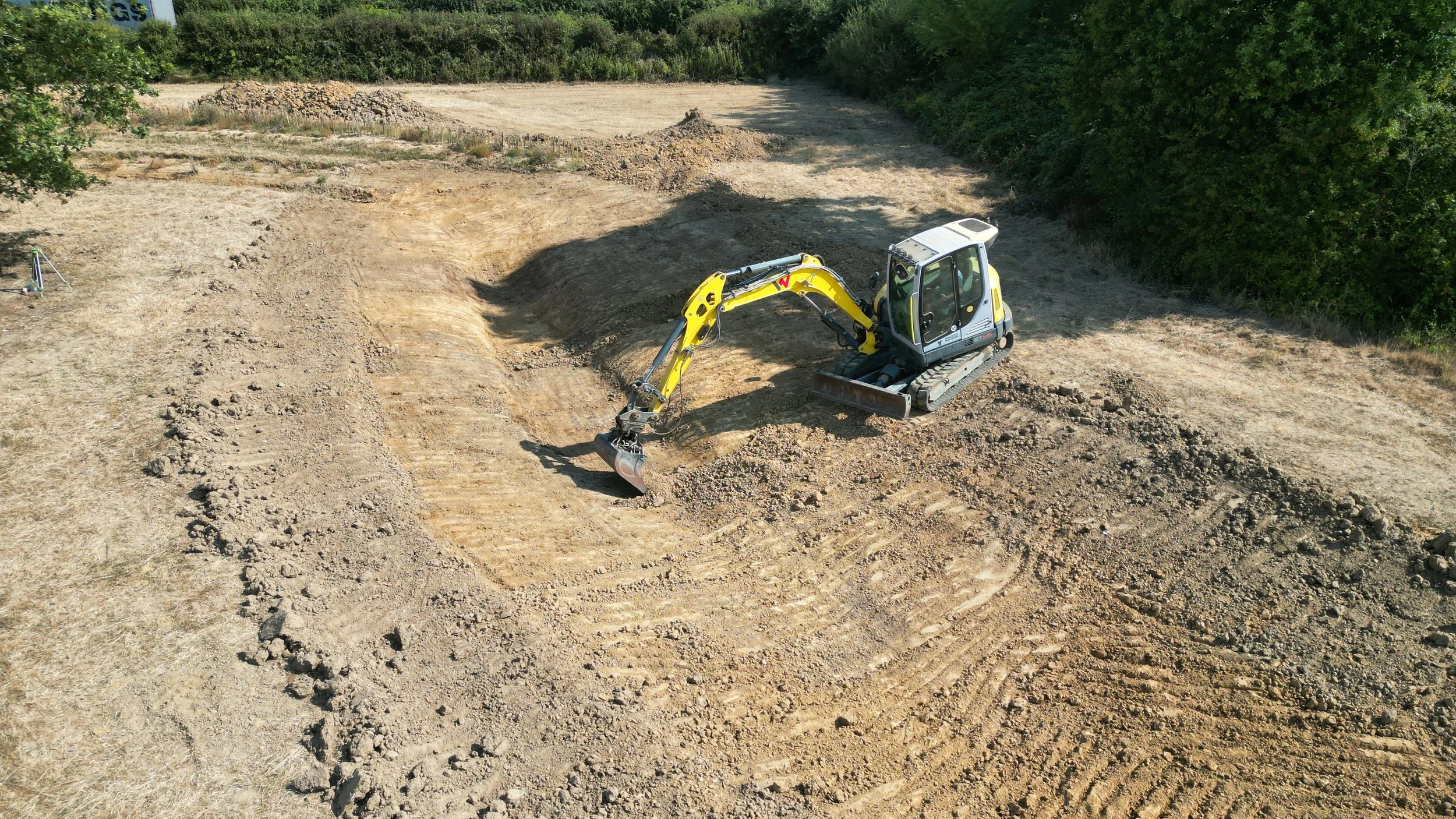
The pond was excavated and shaped using specialist machinery, with particular attention paid to creating natural transitions between the deeper areas and shallow margins.
Rather than creating uniform banks and depths, the earthworks were formed to provide a varied profile across the habitat.
Excavated material also had to be carefully managed as part of the works, allowing the site to be shaped efficiently while minimising unnecessary handling and vehicle movements.
Reed Beds & Wetland Habitat
An important element of the project was the creation of reed-bed and wetland areas around the pond.
These shallow areas are designed to support wetland vegetation as the habitat establishes, creating greater diversity than a standalone body of open water.
Over time, the combination of open water, shallow margins, reed beds and surrounding vegetation should provide habitat suitable for a range of wildlife and contribute towards the wider biodiversity objectives of the site.
Delivering BNG & Ecological Projects Across West Sussex
We undertake the practical delivery of Biodiversity Net Gain, habitat creation and ecological mitigation works throughout Chichester and the wider West Sussex area.
Working alongside ecologists, developers, landowners and other professionals, our services include pond and wetland creation, reed beds, scrapes and swales, habitat earthworks, vegetation management, planting and longer-term habitat management.
Where an ecological design or Habitat Management and Monitoring Plan is already in place, we can review the drawings and specification and provide the plant, operators and practical experience required to deliver the works.
Planning a Biodiversity Net Gain or habitat creation project?
If you have an ecological specification, drawings or habitat plan ready for construction, get in touch to discuss the practical requirements of the project.